
Bearded dragon care
From a sunlit terrarium to a balanced diet: learn how to give your bearded dragon a healthy, active and natural life.
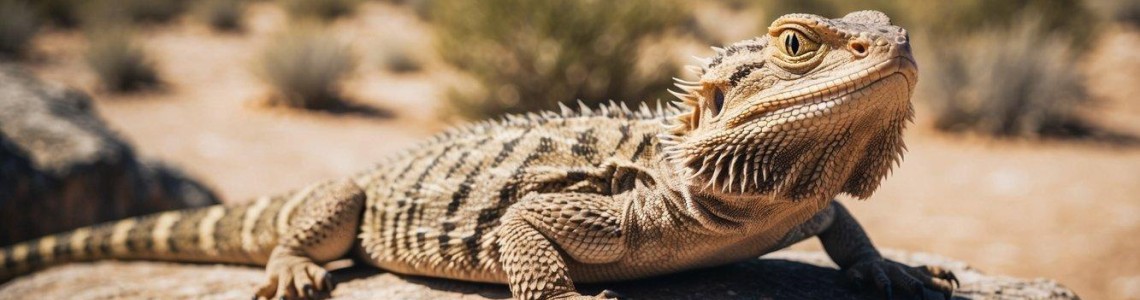
Pogona vitticepsThe central bearded dragon (Pogona vitticeps) comes from dry and semi-arid regions of Australia. Its curious behaviour, spiky beard and love of basking make it a popular reptile. However, good welfare depends on generous space, bright lighting, an appropriate temperature gradient and a carefully balanced diet.
Terrarium size and space
Bearded dragons are active, mainly ground-dwelling lizards. They walk, dig, climb low structures and move between warm and cooler areas. A terrarium of 120 × 60 × 60 cm is often cited as a minimum for one adult; 150 × 60 × 60 cm or larger provides more freedom of movement.
Essential furnishings
- A stable, raised basking platform
- A hide on both the warm and cool sides
- Secure rocks, cork and climbing branches
- Open floor space and a suitable digging area
- A sturdy water dish
Ventilation and safety
Provide good ventilation and securely fitted lamps. Prevent unstable rock piles and direct contact with hot bulbs or fittings.
Browse reptile hides and terrarium substrates for a natural setup.
Heat and temperature gradient
A bearded dragon must be able to choose between an intensely warm basking area and a cooler resting zone. Position a suitable reptile heat lamp above one end of the enclosure.
| Area | Practical guideline |
|---|---|
| Basking surface | Approximately 40–45 °C |
| Warm-side air | Approximately 30–35 °C |
| Cool side | Approximately 24–28 °C |
| Night | Usually around 18–22 °C |
Measure the surface temperature with an infrared thermometer and air temperatures with reliable digital probes. Adjust for age, condition and behaviour. An under-tank heat mat cannot replace overhead basking heat.
UVB and bright daylight
Bearded dragons need bright daytime lighting and suitable UVB exposure. UVB supports vitamin D3 synthesis and calcium metabolism. A linear T5 HO UVB tube with an appropriate reflector and fixture is a common choice.
An approximate UVI of 3–5 at back height in the basking area is a useful starting point, with shade and lower exposure elsewhere. Lamp strength, distance, mesh and reflector all affect actual UV output; a UV meter helps verify the setup.
Maintain a consistent day–night cycle, often around 12–14 hours of light during the active season, and keep nights dark.
Substrate and furnishings
A dry, well-designed enclosure should allow natural walking and digging. For a healthy adult, a firm, diggable mixture of reptile-safe soil and sand can work well. A properly planned bioactive setup is another option.
For newly acquired animals, young dragons requiring close observation or animals under veterinary care, a simple easy-clean temporary substrate can be useful. Avoid loose gravel, sharp stones, wood chips and difficult-to-clean reptile carpet.
Explore reptile substrates and our article on bioactive terrarium substrates.
Leafy greens and vegetables
Bearded dragons are omnivores. As they mature, suitable leafy greens make up an increasingly large proportion of their diet. Offer adults fresh, varied vegetables every day, including on days without insects.
Wash vegetables thoroughly and rotate varieties. Fruit is best kept as a rare treat because of its sugar content and is not needed as a staple. Avoid avocado and unknown or toxic plants.
Varied feeder insects
Insects provide protein and other nutrients. Offer a variety suited to the dragon’s size and condition. Feed the insects a nutritious diet beforehand (gut-loading) and remove uneaten insects.
Young bearded dragons
Growing dragons need insects more frequently. Amounts and feeding intervals depend on age, growth rate and body condition. Introduce suitable greens from an early age.
Adult bearded dragons
Adults should receive leafy greens daily, with controlled portions of insects on a few days each week. Overfeeding and obesity are common problems.
Mealworms and fatty larvae should not be daily staples. Mice and other vertebrate prey are not recommended as routine food for a typical bearded dragon.
Calcium and vitamin supplements
Good calcium management combines suitable UVB, varied food and a sensible supplement schedule. Zoo Med Repti Calcium without D3 can be used to lightly dust feeder insects.
A multivitamin may also be useful depending on the complete diet, such as Zoo Med Reptivite. Products are available with and without vitamin D3; choose according to UVB exposure and other supplements. Arcadia EarthPro RevitaliseD3 is another product to consider within a carefully planned schedule.
Water and humidity
Provide fresh drinking water every day in a stable, easy-to-clean reptile water dish. Some dragons rarely drink visibly and also obtain moisture from vegetables and insects.
Keep the enclosure generally dry and well ventilated. About 30–40% relative humidity is often a useful reference, although short fluctuations are normal. A slightly damp local digging or shedding area may be beneficial; soaking the whole enclosure daily is unnecessary.
Behaviour and safe handling
Bearded dragons communicate through posture, head bobbing, arm waving and darkening or puffing out their beard. A black beard can indicate stress, territorial or breeding behaviour, or discomfort.
Allow new arrivals time to settle and confirm that they are eating. When lifting a dragon, support the chest, abdomen and hind legs. Supervise children, prevent falls and wash hands with soap and water after handling reptiles or enclosure equipment.
Health, growth and shedding
A healthy dragon is usually alert during its active hours, moves confidently and responds to its surroundings. Track body weight, body condition, droppings, appetite and shedding.
Warning signs
- Tremors, weak limbs or an abnormal jaw
- Persistent lethargy
- Respiratory noise or open-mouth breathing away from basking
- Significant weight loss or prolonged refusal of food
- Swollen joints or difficulty walking
- Retained shed around toes or tail
Common health concerns
Inadequate UVB or calcium may contribute to metabolic bone disease. Other concerns include parasites, dehydration, obesity, injuries and egg-laying complications.
Consult a reptile-experienced veterinarian if you notice concerning symptoms.
Some dragons become less active in cooler periods (brumation). Do not automatically assume a lethargic or non-feeding animal is brumating; rule out illness first.
Females and egg laying
Adult females can produce infertile eggs even without a male. A female showing digging behaviour or signs of carrying eggs should have a quiet laying area with sufficiently deep, slightly moist and stable digging substrate.
Preparing before purchase
Set up the enclosure fully before buying a dragon. Run the heat and lights in advance, verify the UVB arrangement and prepare a suitable feeding and supplement plan.
Check that you have hides, basking lamps, T5 UVB lighting, substrate, a water dish, suitable feeder insects and supplements.
Choose a healthy captive-bred animal from a reliable breeder or seller. Ask about age, diet, origin and any health history. Health and provenance matter more than colour morph.
Practical care routine
Every day
- Check temperatures and lighting
- Provide fresh drinking water
- Offer suitable fresh leafy greens
- Observe behaviour, appetite and droppings
- Remove waste and leftover food
Weekly and periodically
- Review feeder insects and supplement schedule
- Inspect enclosure furniture, lamps and ventilation
- Monitor weight and body condition
- Check UVB output and replace lamps when needed
- Arrange a faecal test if indicated
Frequently asked questions
What size enclosure does an adult bearded dragon need?
120 × 60 × 60 cm is often used as a minimum, but a larger horizontal enclosure allows more exercise, digging and temperature choice.
Do bearded dragons need UVB?
Yes. Appropriate UVB is essential for vitamin D3 and calcium metabolism. Actual UV index at the animal’s position matters more than the percentage printed on the lamp.
How hot should the basking spot be?
A surface temperature around 40–45 °C is a useful reference for many healthy dragons. Always provide cooler areas and verify measurements.
Should a bearded dragon eat insects every day?
Young dragons need insects more frequently. Adults should receive leafy greens daily and suitable insect portions on selected days.
Can bearded dragons live on sand?
A suitable diggable substrate can be used for healthy dragons in a well-designed enclosure. Avoid inappropriate loose materials and consider health and feeding behaviour.
Can two bearded dragons live together?
Separate housing is usually safest because cohabitation can cause stress, dominance and injuries.
Why does my dragon’s beard turn black?
A dark beard can be linked to stress, territorial or reproductive behaviour, or discomfort. Consider the whole animal and seek veterinary advice if illness is suspected.
Why is my dragon less active in winter?
Brumation is possible, but lethargy and appetite loss can also indicate illness. Seek veterinary advice if unsure.