
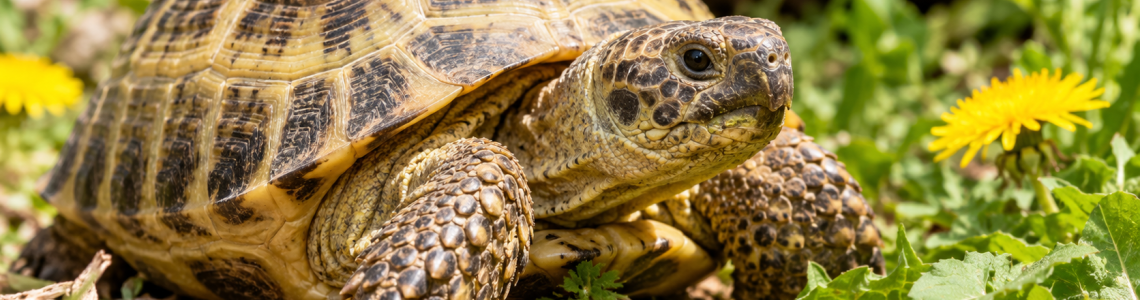
Russian tortoise care
Discover how to create a spacious, natural and healthy environment for this active, digging tortoise from Central Asia.
Testudo horsfieldiiThe Russian tortoise (Testudo horsfieldii), also known as Horsfield's tortoise, originates from the dry steppes and semi-deserts of Central Asia. Despite its relatively small size, this active species requires plenty of room to walk, dig, forage and bask.
Good care involves more than providing heat and food. A spacious enclosure, deep substrate, suitable lighting, safe hiding places and a varied high-fibre plant diet are essential.
Origin and natural behaviour
Russian tortoises occur in parts of Kazakhstan, Uzbekistan and neighbouring Central Asian regions. Their natural habitats include dry grasslands, rocky terrain and steppes with significant seasonal temperature differences.
They are excellent diggers and use burrows to escape extreme heat, cold and dry conditions. A suitable enclosure should allow walking, digging, basking and hiding.
Typical behaviour
- Active during daylight hours
- Frequent walking and foraging
- Digging and sheltering
- Basking to regulate body temperature
- Territorial behaviour, especially between males
A long-term commitment
Russian tortoises can live for many decades. Their care requires suitable space, consistent husbandry and a long-term commitment.
Provide a spacious indoor enclosure
Although Russian tortoises are relatively small, they need substantial floor space. Small glass tanks are unsuitable as permanent adult housing.
A large tortoise table or indoor pen is preferable. An area of approximately 250 × 125 cm or larger is a useful goal for an adult. More space allows better exercise and a proper thermal gradient.
Essential features
- Open walking space
- Warm and cool zones
- Several secure hiding places
- Deep, diggable substrate
- A shallow drinking dish
- Safe rocks and natural obstacles
Why avoid small aquariums?
Small tanks restrict movement and make it difficult to provide different temperature zones. Transparent walls may also encourage repeated attempts to escape.
For a juvenile tortoise or as part of a larger setup, consider the HabiStat Tortoise Table 109 × 61 × 63 cm. This table alone is too small for permanent adult housing.
Explore our reptile hides and terrarium substrates.
A safe outdoor enclosure
A secure outdoor pen is extremely valuable in suitable weather. Natural sunlight, fresh air, exercise and opportunities to forage support natural behaviour.
Allow several square metres per adult where possible. Around 2–3 m² is a practical lower starting point for an outdoor pen, while 4 m² or more provides greater freedom.
Outdoor enclosure checklist
- Strong, opaque perimeter walls
- Burrow-resistant foundations
- Protection against predators and escape
- Sunny and shaded areas
- A dry, weatherproof shelter
- Safe edible plants and varied terrain
Russian tortoises can climb and dig surprisingly well. The enclosure must therefore be secure both above and below ground.
Heat and temperature gradients
Russian tortoises depend on external heat to regulate their body temperature. Provide an overhead reptile heat lamp at one end of the enclosure, leaving a cooler retreat elsewhere.
| Area | Practical guideline |
|---|---|
| Basking area | Approximately 32–35 °C |
| Warm-side air | Approximately 26–30 °C |
| Cool side | Approximately 20–24 °C |
| Night | Often around 16–20 °C, depending on conditions |
Monitor temperatures daily using reliable reptile thermometers. Measure both warm and cool areas, preferably using an infrared thermometer to check the basking surface temperature.
UVB and bright daylight
Indoor Russian tortoises require appropriate UVB lighting to support vitamin D3 synthesis and calcium metabolism. A linear T5 HO UVB tube with a suitable reflector and fixture is a common solution.
An approximate UVI of 3–4 at shell height in the basking zone is a useful reference. The actual output depends on lamp strength, distance, reflectors and mesh. Provide shaded areas with lower exposure.
Indoors
Combine UVB, bright daylight and overhead basking heat. Maintain an appropriate seasonal day-night cycle.
Outdoors
Direct sunlight provides natural UVB. Sunlight passing through glass or most plastics does not provide equivalent UVB exposure.
Substrate suitable for digging
Digging is essential natural behaviour. A firm, diggable mixture of suitable untreated soil, sand and possibly clay or loam can create a more natural environment than a bare floor.
Substrate essentials
- Choose safe, untreated materials
- Provide sufficient depth for digging
- Avoid persistently wet or muddy conditions
- Offer a locally more humid retreat
- Remove waste and leftover food regularly
- Secure heavy stones on a stable base
Browse reptile substrates and our article about bioactive terrarium substrates.
A natural, high-fibre plant diet
Russian tortoises are herbivores. Their diet should be based on fibrous, calcium-rich, low-sugar plants, including suitable wild weeds, leaves and flowers.
Rotate food plants regularly and collect them only from clean, pesticide-free areas. Never offer unidentified plants.
Good choices
- Varied safe wild plants
- Suitable leafy greens
- Fibrous edible herbs
- Safe flowers and leaves
Not suitable as staples
- Fruit and sugary foods
- Dog or cat food
- Meat and insects
- Bread and dairy
- Large amounts of nutrient-poor lettuce
Fruit is not necessary for this species and is best avoided. A carefully varied selection of suitable wild plants is generally preferable to feeding only supermarket vegetables.
Calcium and supplements
Calcium supports healthy bones, shell development and muscle function. Appropriate UVB, varied food and a sensible supplement plan work together.
A calcium supplement without added vitamin D3, such as Zoo Med Repti Calcium without D3, may be included in an appropriate feeding programme. A cuttlebone can provide another calcium source.
Water and humidity
Always provide fresh drinking water in a stable, shallow reptile water dish. The tortoise must be able to enter and leave safely.
Keep the enclosure generally well ventilated and avoid persistently wet substrate. A locally more humid hide is beneficial, particularly for younger animals.
Brumation and seasonal behaviour
Russian tortoises experience strong seasonal changes in the wild. Healthy animals may enter winter dormancy, while extreme summer heat can also reduce activity.
Controlled brumation requires suitable preparation, correct conditions and assessment of health, weight and hydration.
Do not begin brumation when:
- The tortoise is ill or losing weight unexpectedly
- Dehydration or poor body condition is suspected
- The animal has only recently been acquired
- Parasites or other health problems are suspected
- Safe, monitored conditions cannot be provided
Health and warning signs
A healthy tortoise is normally alert during active periods, walks confidently and responds to its surroundings. Regularly monitor body weight, eyes, nose, mouth, limbs, shell and droppings.
Warning signs
- Persistently closed or swollen eyes
- Nasal discharge or noisy breathing
- Abnormally soft or damaged shell
- Prolonged refusal to eat
- Unexplained weight loss
- Severe weakness or abnormal movement
Possible health concerns
Inadequate UVB, unsuitable temperatures, nutritional deficiencies, dehydration, parasites and inappropriate housing may contribute to illness.
Consult a reptile-experienced veterinarian when symptoms occur.
Preparing before buying a Russian tortoise
Set up the enclosure before the animal arrives. Test all temperatures and lighting, provide appropriate hides and substrate, and prepare a varied plant-based diet.
Housing essentials
- A spacious indoor enclosure; the HabiStat Tortoise Table is an option for an appropriate juvenile or expandable setup
- A secure outdoor pen when appropriate
- Diggable substrate
- Safe hides
- Overhead heat lamp
Choose a healthy captive-bred tortoise from a reliable source. Check its origin and required documentation, and ask about age, feeding and medical history.
Practical care routine
Every day
- Check temperatures and lighting
- Provide clean drinking water
- Offer varied plant-based food
- Observe appetite and activity
- Remove waste and leftover food
Weekly and periodically
- Monitor weight and body condition
- Inspect shell, eyes and limbs
- Check substrate and hides
- Monitor UVB equipment
- Review diet and calcium intake
- Arrange veterinary or faecal checks when needed
Frequently asked questions
How much space does a Russian tortoise need?
Adults need substantial floor space. An indoor area around 250 × 125 cm or larger is a useful goal, with a secure outdoor enclosure offering several square metres when conditions permit.
Is the HabiStat Tortoise Table suitable?
The 109 × 61 × 63 cm HabiStat table may suit an appropriately sized juvenile or form part of a larger setup. It is too small on its own for permanent adult housing.
Can Russian tortoises live outdoors?
Yes, in suitable weather. Outdoor housing must protect against escape, predators, prolonged wet conditions and inappropriate temperatures.
Do Russian tortoises need UVB?
Yes. Appropriate UVB is essential indoors, while direct natural sunlight provides UVB outdoors.
What should a Russian tortoise eat?
A varied, high-fibre diet of safe wild plants, leafy greens, herbs and edible flowers. Avoid animal protein and sugary foods.
Should Russian tortoises brumate?
Brumation may be appropriate for healthy, properly prepared animals but requires safe conditions and veterinary guidance.
Can two Russian tortoises live together?
Individual housing is usually safest because territorial and mating behaviour can cause stress and injury.
Do they need water every day?
Yes. Provide a shallow, accessible dish of fresh water at all times.
How long do Russian tortoises live?
They can live for more than 40 years with appropriate care, making ownership a long-term commitment.